
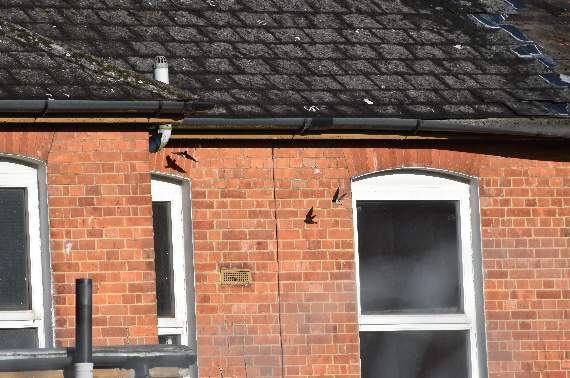
CAMPAIGNERS are angry after housing developers at Bordon’s Louisburg Barracks are alleged to have damaged birds’ nests, which the campaigners say is against the law.
Bordon naturalist Stephen Miles has long been critical of the impact on wildlife that the Whitehill and Bordon regeneration scheme will have, and has accused developer Barratt-David Wilson Homes of harming protected birds.
However, senior figures at Barratt Homes, based in Coalville in Leicestershire, said they take wildlife “seriously” and that all work carried out had been done with the approval of the county ecologist. They also insisted that no building with any nesting birds had been demolished.
Contractors are carrying out work in the early stages of the 500-home development being built on the former barracks.
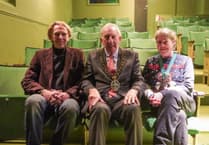



“With all the consultants’ reports that have detailed the fauna living within the old Louisburg Barracks sites, you would have thought that all those organisations whose logos appear on the sales and development board situated outside this site, would have been careful about their reputations,” said Mr Miles.
“But I caught Barratt Homes and David Wilson Homes in the act, with their site demolishment partners, of destroying wild birds’ nests and presumably nestlings, namely our migrant and now declining house martins and swifts, by taking the roof tiles and felting off building number 95 and also in the act of demolishing building 91, which are both visible from Station Road. To do this while the birds are swooping up to their nests in the roof space at this time of year is unacceptable and is illegal under the Wildlife and Countryside Act 1981. The RSPB states these migrant birds are protected at all times.”
Mr Miles said he spoke to the site manager and, “to his credit”, the demolition work had “moved elsewhere” by 4pm.
“But by this time the needless damage to nests had been done,” he added.
“I shall be complaining to the Secretary of State for the Environment (Elizabeth Truss) in due course because currently protection of wildlife is clearly not happening in Bordon and perhaps not elsewhere either.”
Mr Miles, a founder member of conservation charity Buglife, went on to say that he “warned” East Hampshire District Council - at the planning meeting which originally gave permission for the development - of “the site’s sensitivities”, adding that he was “horrified such destructive events still take place”. He called on developers to “show more sensitivity” for local wildlife.
“The remaining buildings, mostly the two to three-storey barracks, in which swifts and house martins are still nesting on the Louisburg site, must not be demolished at all until after the end of September, when the house martins will have finished their third brood and will be about to head south back to Africa,” he said.
Managing directer at Barratt Homes, Tim Hill, said: “Barratt Homes takes its commitment to the environment and wildlife extremely seriously and we can confirm that all works have been carried out with the approval of the county ecologist and East Hampshire District Council planning. No building with any sign of nesting has been demolished and we have worked closely with ecologists at all times and have ensured we follow the agreed ecological mitigation management plan.”
Bordon resident Cherry Cray also contacted the Bordon Herald to express her concern. “Despite all the assurances given by the district council and associated agencies regarding the preservation of wildlife and natural habitat in the Whitehill and Bordon regeneration scheme, who on Earth has sanctioned the demolition of buildings on Louisburg Barracks at the height of the bird-nesting season?” she asked.
“Having worked on these barracks for some 25-plus years I have first-hand knowledge of the hundreds of pairs of house martins that return, annually, to our shores and build their nests in the eaves of the barrack buildings. I, and former employees, looked forward, year on year, to the return of these birds that busily went about their lives, rearing their young, just above our office windows.
“Now, it is heartbreaking to see these little birds flying frantically and helplessly around as their young and homes are destroyed.”
Comments
This article has no comments yet. Be the first to leave a comment.