
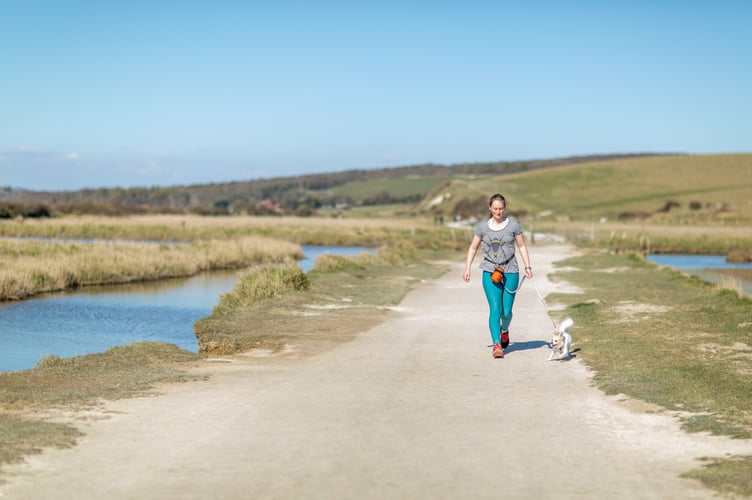
Responsible dog owners already look after the countryside by keeping dogs on leads around livestock and picking up dog poo, but many will not realise that their canine companions should be on leads near ponds and rivers in order to save wildlife.
The South Downs National Park has added a new thread to its existing Take the Lead campaign with the help of a talking trout, an Adonis blue butterfly and other small creatures who appear in a series of wildlife animations to show the impact of dogs on water habitats.


.jpg?width=209&height=140&crop=209:145,smart&quality=75)

While dogs may enjoy a good splash, they stir up sediment which can settle on plants and stop light getting to aquatic vegetation which then is stunted.
Dogs can also disrupt spawning amphibians such as tadpoles and newts, and trample on insect larvae in the riverbed, so depriving other wildlife of a food source.
Jan Knowlson, biodiversity officer for the national park, said: “The South Downs National Park is a great place for dog-walking and we want people and their pets to continue to enjoy it.
“The National Park is a haven for wildlife and we’re working hard to give a helping hand to nature, which is really struggling across the UK, mainly due to loss of habitat over many decades.
“So this initiative is all about raising awareness about the impacts of dogs on watercourses and how dog walkers can play their part in nature recovery.
“Clean, healthy waterways are absolutely vital for both people and nature and we can all work together to help restore these precious wetlands.”
The riverbanks are also ecosystems supporting native flora and fauna and providing places for animals such as kingfishers and water voles to nest, and dogs can damage these by causing erosion as they push through to the water.
The Take the Lead initiative also aims to educate the public about the dangers of ‘spot on’ flea and tick treatments which contain powerful pesticides and which can enter watercourses via several avenues, including dogs entering a pond for a swim.
Aimee Felus, chief executive of the Western Sussex Rivers Trust, one of the partners in the Downs to the Sea project, said: “There’s a growing amount of evidence of the harm caused to rivers from flea spot-on treatments.
These powerful insecticides kill river invertebrates which are such an important part of a river’s ecology, as well as being the basis of the food chain which supports many of our wonderful iconic river species such as trout, kingfishers and otters.
“All of us dog owners can help by speaking to our vet about alternative treatments and keeping our dogs on a lead near ponds and rivers.”
To watch the animations and for more information on Take the Lead, as well as frequently asked questions about dogs and water, visit https://www.southdowns.gov.uk/take-the-lead/
Comments
This article has no comments yet. Be the first to leave a comment.