
The redevelopment of the former military town is well under way, and plans include a new town centre at the former Prince Philip Barracks site, 3,350 new homes across three sites (Prince Philip, Louisburg and Quebec barracks), 5,500 new jobs, new schools, new leisure, health and care facilities, and a construction-skills training centre and business and enterprise centre at Louisburg.
To provide the thousands of new jobs promised as part of the development the search is on for new businesses and retailers to move in.
Mr Pearce said: “What we are doing, with the developers, is scanning the world frankly to see if we can get the best employers interested in locating into the town. We think we will have some successes there, so we want to try to ensure that residents are trained up as best as they can be.”

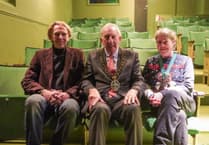


He said thought had gone into trying to design the new Whitehill and Bordon, which has Healthy Town status, to make it as easy as possible for residents to live greener lifestyles.
“Walking is the easiest, cheapest and healthiest way for people to get around so we’re trying to do what we can to encourage people to do that and make it easier for them to do so,” he said.
“For cycling we have done the same. It is good for the environment and for the individual, but it’s important that people feel safe.”
Beatrice Hubert-Price, the eco-housing and retrofit officer for the project, said she lives in the area and has a first-hand insight into the improvements that the regeneration project can offer.
“As a resident it is fantastic to finally see things coming out of the ground - all the new facilities and the grid loop being built. Things are happening and I think the residents can physically see the new improvements.”
She understood concerns about the number of new homes, but reassured residents that the development would progress steadily.
“New houses are not going to appear all at once - it will be a phased development,” she said. “New people will be able to embed into the community. New residents will come in across the next 15 years - there’s not suddenly going to be a huge surge.”
And, following the vote to Leave the European Union in the Referendum two weeks ago, the chairman of the Local Enterprise Partnership, which is investing in the redevelopment of Whitehill and Bordon, said it was business as usual.
In the autumn the town was one of three that Chancellor George Osborne announced as a new Enterprise Zone, “paving the way for millions of pounds of private investment”, with Basingstoke and Chertsey.
And on Monday, June 27, four days after the EU Referendum result, at the University of Surrey 5G Innovation Centre, chairman of the Enterprise M3 Local Enterprise Partnership Geoff French opened the annual meeting by saying it was business as usual.
“We will keep doing what has brought us so much success, supporting business for the future, because it has been very successful.
“We need to keep going as at present, and only change direction when there is a clear indication that such a change is required.
“We have an economy that is performing strongly here and our area is one of the main net contributors to the Exchequer, so right now we need to continue supporting to keep the economy strong and growing.”
Board members, staff, partners and members of the public gathered at the Innovation Centre to discuss the highlights of the past year and look ahead to the next.
Kathy Slack, executive director of Enterprise M3, pointed to the huge success of the LEP’s Growth Hub, a mechanism to offer guidance and support to high-growth businesses. She said progress had also been made towards setting up Enterprise Zones, with the first to be opened in April 2017.
“There’s plenty to be proud of in the area, with business birth and survival rates in the M3 region above the national average and employment in the area at 79.8 per cent,” she added.
But the M3 region has also faced challenges, with devolution becoming an important issue over the past few months. Ms Slack said Enterprise M3 had “been working hard behind the scenes and will continue to be part of the debate as it moves forward”.
She echoed the view that the best course of action was to carry on helping businesses grow: “We need to continue supporting our companies as much as possible at the current time, and we have to look at our strategy, our funding and our delivery of projects. But we must also show a huge amount of leadership.”
Being named as an Enterprise Zone is a big boost for Whitehill and Bordon in terms of attracting new businesses to the town. Businesses which move to the Enterprise Zone by March 31, 2022, will not have to pay any business rates for five years.
Business rates generated in the Enterprise Zone will be retained in the area by the LEP to provide an investment fund over 25 years.
The town has been identified as one of the centres able to lead the world in areas like digital media, 5G and cyber security.
The LEP estimates that the Enterprise Zone could bring 105 new businesses and 495 jobs to Whitehill and Bordon, as well as 20,000 square metres of new commercial floor space.
Comments
This article has no comments yet. Be the first to leave a comment.