
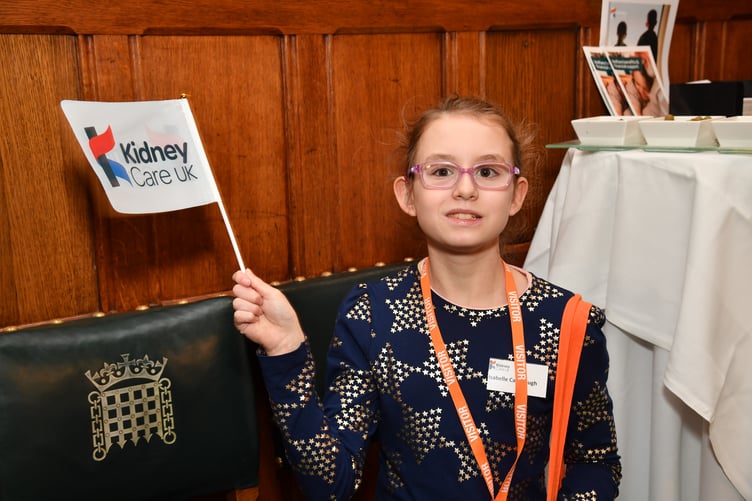
An 11-year-old schoolgirl from Bentley who nearly died from sepsis as a toddler has endured 66 hospital visits in just 16 months following a kidney transplant.
Isabelle Cavanough faces a two-hour round trip from East Hampshire to Southampton Children’s Hospital for treatment and monitoring – an average of almost one visit a week.
Her mother, Elise, 44, gave up her successful career in investment management 10 years ago to care for her daughter, who now attends St Edmund’s School in Hindhead.
Despite spending countless hours travelling to and from hospital and facing mounting fuel and parking costs, the family has not received a penny in reimbursement for their journeys.
A fight for survival
Isabelle was born healthy but contracted a bacterial infection at 16 months old, which led to severe sepsis and meningitis.
Elise said: “She was very, very poorly and nearly didn’t make it. In fact, we were told to prepare to switch her off.”
Isabelle spent three months in hospital and made a remarkable recovery, but the sepsis had severely damaged her kidneys, leaving them functioning at less than 30 percent of normal capacity at best.
For years, doctors monitored her declining kidney function before she began dialysis at the age of eight to keep her alive.



18 months of kidney dialysis
For 18 months, Isabelle spent between 10 and 11 hours every night attached to a dialysis machine beside her bed.
Elise said: “We were able to do home dialysis, which was gruelling.”
The treatment placed an enormous burden on the family, who could not even go away overnight because of the equipment Isabelle needed.
“It’s very life limiting for everybody,” she said.
In July 2025, after a family friend came forward offering to donate a kidney, Isabelle received a successful transplant through the living donor pairing scheme.
Although the operation transformed her quality of life, Isabelle must take powerful medication for the rest of her life to prevent her body rejecting the kidney.
The medication leaves her vulnerable to infections, meaning even a sickness bug picked up at school can result in an emergency hospital admission.
A life-changing transplant
Elise said: “It’s better than it was on dialysis, no doubt about that. And she’s got a much better quality of life now.”
However, as Isabelle approaches her teenage years, her mother is increasingly concerned about the psychological impact of everything she has endured.
“She’s desperate just to be a normal child,” Elise said.
“She just wants to go into school and be like everybody else and to do things like everybody else.”
The uncertainty also takes its toll on Isabelle’s eight-year-old brother, Christopher, who has grown up knowing nothing different.
Elise said: “He’s always worried, you know, when we go to hospital, will we be coming home that night?”
The cost of caring
Elise has been unable to return to work because of the unpredictable nature of her daughter’s condition, leaving her husband, Anthony, to shoulder the financial burden of supporting the family.
“It’s a full-time job being a carer for a child with complex conditions,” she said.
Since Isabelle’s transplant, the family has spent hours travelling to and from hospital, excluding time spent waiting for appointments, receiving treatment or dealing with emergency admissions.
Hospital parking typically costs at least £8 per visit, on top of fuel costs.
Despite years of regular hospital visits, Elise only discovered about a year ago that discounted parking was available.
However, she said vouchers must be collected from an office which opens for just two hours a day, three days a week, making them difficult to obtain.
“It basically means you end up just paying the full cost of parking,” she said.
“And when you are regularly there, you are spending a fortune on those sorts of things.”
Taking the fight to Westminster
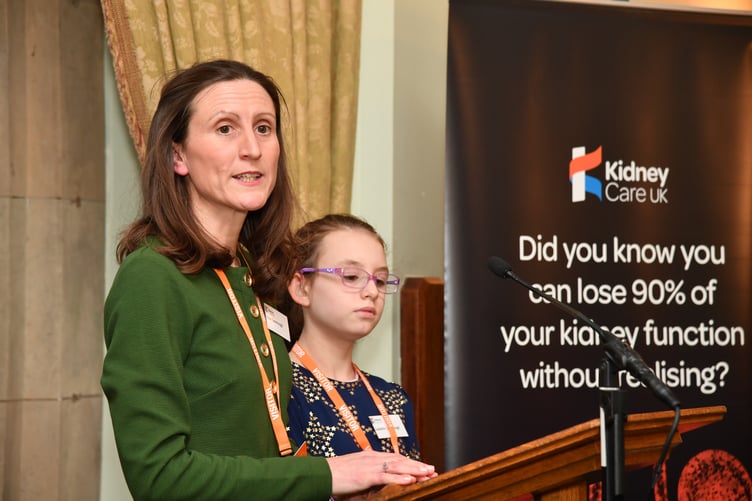
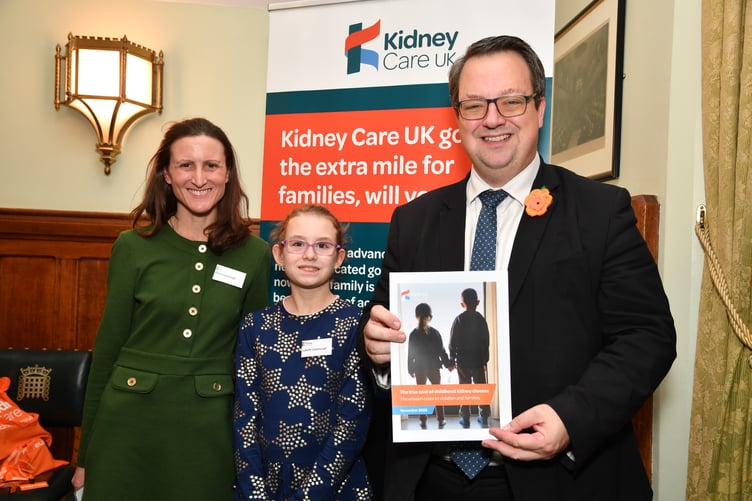
This week, Elise and Isabelle took their experiences to Westminster, joining Alton-based charity Kidney Care UK at the House of Commons for the launch of its new report, The True Cost of Childhood Kidney Disease.
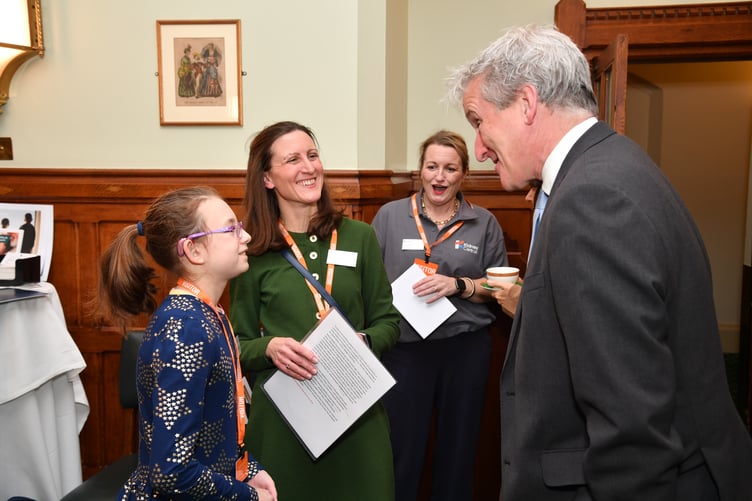
They met several MPs, including East Hampshire MP and shadow health secretary Damian Hinds.
The charity is calling on the Government to establish a travel fund for children with advanced kidney disease, matching the financial support announced earlier this year for children with cancer.
There are about 1,090 children being treated for kidney failure in the UK, but just 13 specialist paediatric kidney centres, leaving many families facing lengthy and expensive journeys for life-saving treatment.
Kidney Care UK’s research found 86 percent of parents and carers surveyed had made changes to their employment because of their caring responsibilities, while 67 percent reported a reduction in income.
Just seven percent said all their transport costs had been reimbursed.
Children with kidney disease missed an average of 50 school days a year, while 78 percent had missed milestones such as school trips, sports days and celebrations.
Elise said: “The strain on the children and the financial burden is immense.”
She said even modest contributions towards fuel and parking costs would make a difference to families already under considerable pressure.
“The ask of government is very minimal really,” she said.
Fiona Loud, policy director at Kidney Care UK, said: “Children with kidney disease should receive the same support that children with cancer receive.
“No child should miss out on their childhood or have their future aspirations held back by kidney disease, or a lack of support to help them live their lives to the full.”
For Elise, speaking out is about ensuring something positive comes from everything her daughter has experienced.
“We want good to come out of what has happened to Isabelle and what she’s had to endure,” she said.
“If that means attending things like this or speaking out about our story, if that means others further back in the line, if you like, can get support, then we want to do that.”
Comments
We've recently changed our login process. If you have an account for commenting, you will need to re-register on the login window.
This article has no comments yet. Be the first to leave a comment.