
AN 11th-hour appeal to the trustees of Chawton House Library to allow a “six-month stay of execution” for the stables and the four Shire horses that form part of its bucolic setting has received the backing of a passionately supportive guarantor.
But the rejoicing may be shortlived. The trustees remain adamant, the horses are to be a casualty of the long-term plan to Reimagine Jane Austen’s ‘Great House’, and to make it more financially viable as a visitor destination.
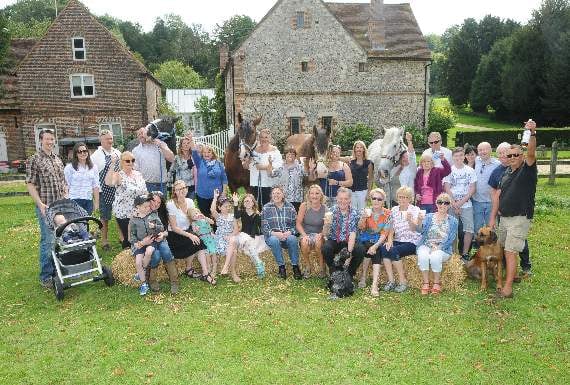
To be axed as part of the cost-cutting exercise, the gentle giants were the centre of attention at a party, last Saturday, when supporters rallied to bid them a fond farewell.
Determined to fight to the end, author and resident Michael Tarte-Booth has written to the trustees urging a reprieve, to allow management and volunteers time to develop an effective operating and marketing plan and budget aimed at transforming the stables into a “self-funded profit-making centre” during 2018.


With a long career in marketing and sales, and with “genuine support within the local community”, Mr Tarte-Booth is backed by Diana Tennyson, chief executive of Four Marks-based Wildlife Support and Conservation, who already sponsors one of the horses and has left a substantial legacy in her will to support Chawton House Library.
She has put up £10,000 security provided the trustees agree to keep the stables open for the next six months to allow time for a plan to be developed to secure the long-term future of the horses, which she believes are “a sustainable asset” that help attract visitors to the Elizabethan manor house.
Like Mr Tarte-Booth, she believes the trustees are guilty of failing to look at the wider appeal of the house and grounds, and to make the most of its assets, including the stables, by “putting their eggs into one literary basket”.
In 1992, multi-millionaire benefactor Dr Sandy Lerner saved the manor house from disrepair through purchasing the leasehold and embarking on a major restoration programme. Since then it has enjoyed a world-renowned reputation in academia as a research centre for early women’s writing and has relied for its main source of income on Dr Lerner’s charitable foundation. But last year, Dr Lerner handed over the reins and her patronage, laying bear an over-dependency and resulting in the launch, in June, of a major fundraising campaign.
While understanding the sadness surrounding the decision to get rid of the horses, the trustees say it was made drawing on expertise from the team, which includes experience in with heritage properties, landed estates and visitor attractions together with expert advice from living history museums like Weald & Downland and Beamish, which keep heavy horses.
While suggestions had been made by supporters that, as well as working on the land, the horses could be used as a way of linking up with Jane Austen’s House by transporting visitors by cart between the two properties, Chawton House chief operating officer James MacBain ruled it out, saying: “Our four horses are not very robust, and could not be asked to undertake hard or continuous work, putting into question the ability to pull carriages every day to transport visitors. Furthermore, according to expert advice, the income that they could realistically generate was modest and would never cover the substantial costs of their upkeep.”
He added: “We took the decision to no longer keep them here with great reluctance – not least because of the redundancies it involved – and only after careful and lengthy consultation with the head horseman, Angela McLaren. Our main priority has been to find excellent homes for them, led by Mrs McLaren herself, and I am very pleased to say that this has been achieved.”
On the need for change, Mr MacBain explained the predicament, adding: “Dr Lerner was more than our principal financial mainstay, she established Chawton House Library in line with her own interests in early women’s writing, and she introduced Shire horses here because they were a personal passion of hers.
“She was the chairman of trustees until August 2016. She was involved personally in setting strategy and, more unusually, in making day-to-day operational decisions. We were incredibly lucky to have this support, but it made changes in business planning very challenging, and we could not raise significant funds from other sources when we were so closely associated with a wealthy benefactor.
“When Dr Lerner informed us that she would cease annual funding after 2017, she also pledged to donate a very substantial one-off donation – a very welcome offer, which would have allowed us to seek funds from other sources and develop a robust business plan while maintaining a secure financial footing. However, in early 2017, it became apparent that no time or plans had been fixed by Dr Lerner for this donation, and the trustees had to make speedy decisions in a very different and unwelcome context, recognising that such a donation may well not ever materialise.”
Mr MacBain said that future plans, which include discussions with Jane Austen’s House Museum and the ‘Reimagining Jane Austen’s Great House’ project, will go out to public consultation shortly.
Comments
This article has no comments yet. Be the first to leave a comment.