
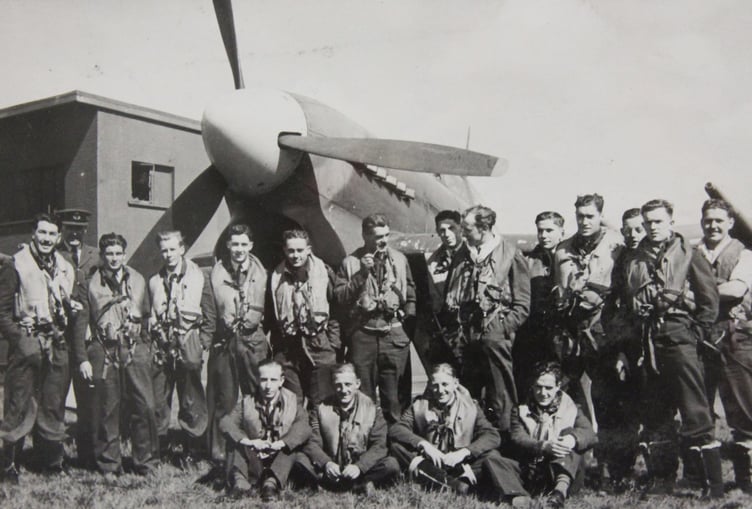
We must never forget the sacrifice of The Few
With the 86th anniversary of Battle of Britain Day on 15 September, we remember the courage, sacrifice and resilience of the remarkable generation known as ‘The Few’.
During the summer and autumn of 1940, they fought and won against incredible odds in the skies over southern Britain, helping to defend our nation in one of its darkest hours and secure the freedoms we enjoy today. Their legacy continues to inspire generations that have followed.
As a former RAF Sergeant and parachute jumping instructor, I know first-hand the challenges military service can bring.
During a routine exercise, my main parachute failed and my reserve became tangled, resulting in a 6,000-foot fall that left me paralysed.
With the support of the RAF Benevolent Fund, the RAF's longest-standing charity, I was able to rebuild my life, regain my independence and find a new purpose. Today, I am proud to serve as an ambassador, helping others understand that support is available when they need it most.
The men and women who fought during the Battle of Britain faced extraordinary pressures and uncertainty. While the nature of military service has changed over the decades, the demands placed on those who serve remain significant.
.png?width=209&height=140&crop=209:145,smart&quality=75)



Just as the RAF Benevolent Fund was there to support RAF personnel and their families during and after the Second World War, it remains committed today to providing support when need arises and to strengthen the resilience and wellbeing of the RAF Family.
The Battle of Britain provides a poignant reminder not only of what was achieved through courage and determination, but also of our responsibility to look after those who have served. It is a responsibility that spans generations and remains as relevant today as it was eighty-six years ago.
If you know anyone who could benefit from the life-changing services the Fund provides, you can find more details at www.rafbf.org
Bob Greig,
RAF veteran and RAF Benevolent Fund Ambassador,
Knaphill
Tuberculosis belongs in the history books
Many people think tuberculosis (TB) belongs to the Victorian past. However, it remains one of the world’s most serious infectious diseases and is still present in the UK.
In fact, TB rates in the UK have been rising in recent years, and the country is now very close to losing its low-incidence status.
TB is preventable, treatable and curable, but it thrives where insecure or overcrowded housing, poor nutrition and barriers to timely healthcare coincide.
These risks are not confined to any one group. Low awareness among the public and parts of the medical community can delay diagnosis, while stretched services struggle to provide consistent follow-up.
Historically, Surrey played a major role in the treatment of tuberculosis through specialised sanatoriums built in its clear, fresh air during the early and mid-20th century.
Today, researchers at the University of Surrey are leading important scientific studies to understand how tuberculosis bacteria survive, control their growth and resist standard antibiotic treatments.
A recent cross-party parliamentary report calls for a coordinated and adequately funded response, and the Government is now preparing its National TB Action Plan for 2026–31.
In his new role as Shadow Minister for Health and Social Care, I hope our MP, Greg Stafford, will press ministers for a properly resourced domestic plan and sustained support for prevention and treatment overseas.
Tackling TB abroad as well as here is not only humane; it protects the NHS and us all.
Sister Gillian Price FC
Holy Cross Hospital
How a choir saved my life
If you’d told me a few years ago that I’d one day write about a choir feeling like family and saving my life, I wouldn’t have believed you.
When I joined Vox Choir, I was at quite a low point in my life. I was immediately struck by how friendly and welcoming everyone was. The music, the laughter and the wonderful harmonies gave me something to look forward to, and I found myself gradually becoming part of this amazing group of people.
A few months later, my mental health took a turn and I was signed off work. I’m a private person, so I didn’t tell people what was happening. Instead, I retreated to bed and missed many weeks of rehearsals.
But the choir noticed I was gone.
Members checked in on me regularly, and eventually I felt safe enough to share that I was struggling with depression. They offered friendship and practical help to get me back to rehearsals.
That might sound like a small thing, but it wasn’t.
At a time when I felt very alone, knowing that people noticed my absence, cared about me and wanted me back made a huge difference. Vox gave me a sense of belonging when I desperately needed one.
When I returned to choir, it was magical. I cannot express what it felt like to realise that I was genuinely part of a family. Since then, I’ve laughed, danced and even cried during rehearsals. There’s no judgement. People care — truly care — about each other.
Regardless of how I feel when I arrive at choir, I almost always leave feeling better.
And that is why I say Vox Choir saved my life.
I’m not suggesting that singing is a replacement for professional mental-health support. It isn’t. But sometimes, when someone is struggling, it can be the human connection around them that makes all the difference. Having somewhere to go. Having people who notice when you’re missing. Having a reason to get out of bed and something to look forward to.
For me, Vox Choir is that place. It doesn’t just give me music. It gives me connection, friendship, belonging and hope when I need them most.
I am really looking forward to the new term starting and would love to meet you there too!
Vox Choir meets in Fleet, Yateley and Brookwood, Woking. For more information, visit www.voxskool.com.
Name and address supplied.
Editor’s note: If you are struggling or concerned about someone else, Samaritans offers free, confidential support on 116 123, 24 hours a day.
Comments
This article has no comments yet. Be the first to leave a comment.