
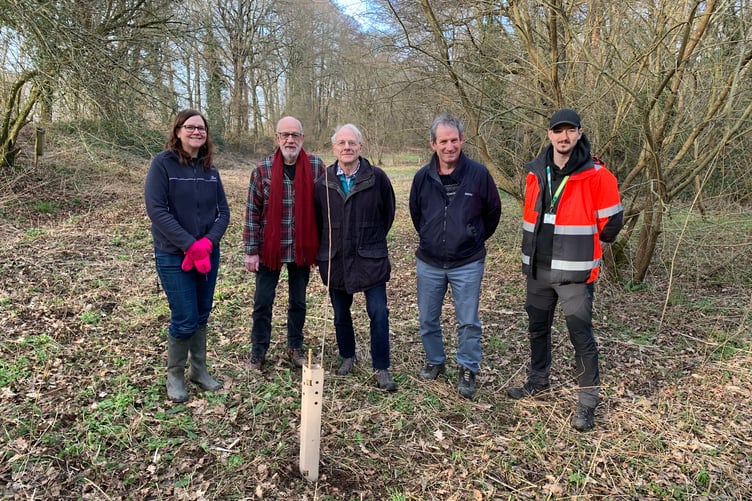
Thirty-six Black Poplar trees have been planted on the Liss Riverside Railway Walk to replace trees lost due to ash dieback.
Black Poplars used to be grown all over the UK for use as timber, but with the introduction of faster growing species from abroad during the Victorian era, large numbers were felled and never replanted.
The trees are dioecious meaning each one is either female or male. Female seeds were viewed as a nuisance, resulting in the trees being felled, which in turned made it more difficult for them to reproduce.
Liss Riverside Walk is a wet area with plenty of space providing ideal growing conditions for the 36 Black Poplars. By strategically placing the trees, they have the best chance of survival and repopulate areas that have seen ash trees felled due to the ash dieback disease.
 Hampshire residents urged to have say on plans to cut more than 400 school places
 Local branch of Bluebird Care wins national award for quality home care
 East Hampshire road closures: almost a dozen for motorists to avoid over the next fortnight
 Boar spotted near East Meon as sightings continue in Petersfield area
Cllr Robert Mocatta, EHDC portfolio holder for regeneration and prosperity (which includes climate and environment), said: “This planting project is a great opportunity to reintroduce a native tree to help diversify and strengthen the woodland of the area.
“Ash dieback has had a significant impact on trees across the country and according to the Woodland Trust, is expected to kill up to 80 per cent of ash trees across the UK.
“Trees are also key to reducing carbon dioxide in the atmosphere through photosynthesis so it is important to replace those lost through disease.”
The Black Poplars ‘whips’ (slender, unbranched plants) have been gifted to EHDC through the Bring Back the Black Poplar project, run by the Western Sussex Rivers Trust. The Trust catchment includes the River Rother and its tributaries in East Hampshire.
Comments
We've recently changed our login process. If you have an account for commenting, you will need to re-register on the login window.
This article has no comments yet. Be the first to leave a comment.