
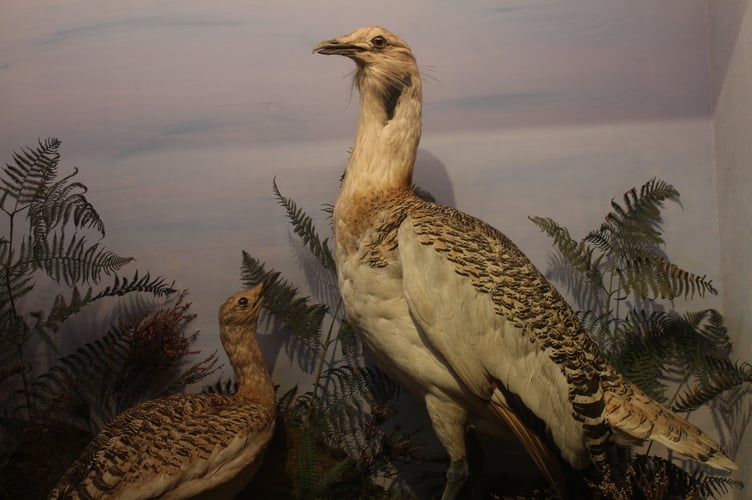
It was a chance discovery in the pages of a 1926 Haslemere Herald that revealed an extraordinary link between Haslemere Museum and one of Britain's greatest conservationists.
While researching the museum's centenary this year, staff uncovered evidence that a young Edward Max Nicholson – long before he became a pioneering ornithologist and helped shape the nation's environmental movement – had played a key role in creating the museum's bird displays.
Using research provided by Haslemere Museum, this week's Peeps explores the remarkable story of the man whose early work in the town foreshadowed a lifetime dedicated to protecting Britain's wildlife.
This year marks 100 years since the museum opened its doors at 78 High Street. When museum staff started researching its history, they thought they had a good idea of what they would find, including the tireless efforts of a voluntary fundraising committee to secure money for a new site, the conversion of The Lodge from a domestic building into a public space, and new objects for the Human History, Natural History and Geology galleries.
The minutiae, however, was fascinating. An article from the Haslemere Herald, dated February 13, 1926, recorded that Mr E.M. Nicholson had spent time arranging the bird displays and preparing an accompanying pamphlet. A note revealed that, in 1993, ornithologist and environmentalist Max Nicholson visited the museum and recognised his own work on the 1926 bird displays.
Nicholson was born in Ireland in 1904, but his family soon returned to England, where he was schooled. The Bodleian Libraries, Oxford, hold some of his personal records, and their website traces his interest in birds to a visit to London's Natural History Museum in 1911.
After writing a number of articles on birds, he won a history scholarship to Hertford College, Oxford, in 1926, the same year he visited Haslemere and published his first book, Birds of England. At Oxford, he joined the newly formed Oxford Ornithological Society and established bird recording programmes said to have inspired the creation of the British Trust for Ornithology.
Stints in journalism, government and policy followed, including chairing the committee that organised the 1951 Festival of Britain. Nicholson's involvement in protecting the environment and wildlife was, however, his greatest contribution.
He helped steer through the 1949 National Parks and Access to the Countryside Act, establishing a legal framework for national parks, and helped set up The Nature Conservancy, which oversaw the creation of many National Nature Reserves and Sites of Special Scientific Interest.
He also helped establish the World Wildlife Fund in 1961. Other national and international organisations benefited from his influence, including the Royal Society for the Protection of Birds, where he was president between 1980 and 1985.
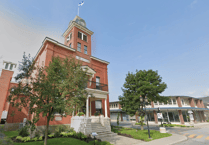
So, back to birds. When Nicholson visited the museum in 1926, as well as arranging the bird displays, he wrote a pamphlet for the museum's long-time associates, the Haslemere Natural History Society.
Science Paper No. 9: Birds in Haslemere Educational Museum detailed how the bird collection was set out in the Zoological and Geological Galleries and the Hall, even name-checking the "last Great Bustard of the British race, shot near Castle Rising in Norfolk, 25th January, 1838", which remains in the museum's collection today.
Nicholson showed early hints of his conservation leanings, observing on his "Bird Protection Exhibit" that "We still have too many men ready to destroy and too few to preserve." In another section, he offers a fascinating glimpse into bird migration, noting that marking was first used systematically (on young woodcocks) on the Duke of Northumberland's Alnwick estates in 1890.
Remarkable discoveries like these remind us just how vital ongoing preservation, collections care and research are within museums and archives.
Taking inspiration from Winston Churchill, who said, "The longer you can look back, the farther you can look forward", the museum's current exhibition looks back at the museum's century on Haslemere's High Street and forward to the next 100 years.
Comments
We've recently changed our login process. If you have an account for commenting, you will need to re-register on the login window.
This article has no comments yet. Be the first to leave a comment.