
On January 31, 1803, the Morning Post reported on the list of potential jurymen who would decide the fate of Colonel Edward Marcus Despard, writes Roy Waight.
The men selected from every part of Surrey included four prominent Farnham residents: John Mainwaring Esq., a hop grower who lived at Sandford House; John Cock, the banker and draper who rented what is now part of Elphick's; Miles Penfold of Badshot, who would later purchase Castle Hill House; and Andrew Collyer, coach master of the George Inn.
The selection of the grand jury was a solemn affair, for Despard was to be tried on a charge of high treason.
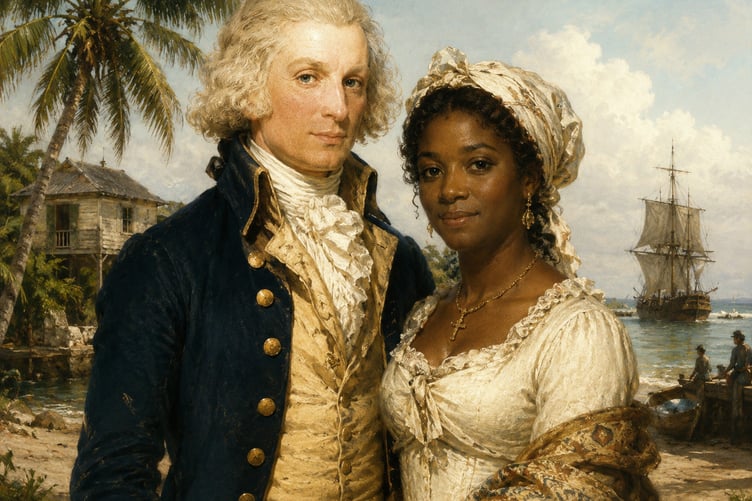
Despard, an Irishman, had enjoyed a distinguished career in the British Army and later served as a colonial administrator in the Bay of Honduras, now Belize. There he married Catherine, a free woman of African descent.




From his colonial experiences, and perhaps influenced by his highly intelligent wife, he developed a strong belief in the equality of men. When Despard allocated land to settlers in Belize, he dismayed slave owners by doing so without distinction of age, sex, character, respectability, property or colour.
Back in England, however, he became involved in revolutionary Irish politics and hatched a plot to assassinate King George III, seize the Tower of London and the Bank of England, and begin a republican revolution.
The government became aware of the plot and bided its time until it believed it had sufficient witnesses to bring a prosecution. Despard and several co-conspirators were arrested and tried before Lord Ellenborough. The prosecutor was Spencer Perceval, who would later earn the distinction of being the only British prime minister to be assassinated.
In a dramatic moment during what was already a sensational trial, Lord Admiral Nelson was called to testify to Despard's excellent character and loyal service to the Crown.
It was not enough. After a brief adjournment, the jury returned a guilty verdict against Despard, while recommending clemency because of his previous good character. Six others were also found guilty.
The appeal for clemency was rejected. The judge then addressed the court: "The only thing remaining for me is the painful task of pronouncing against you, and each of you, the awful sentence which the law denounces against your crime, which is, that you [Despard], and each of you [the co-conspirators] be taken from the place from whence you came, and from thence you are to be drawn on hurdles to the place of execution, where you are to be hanged by the neck, but not until you are dead; for while you are still living your bodies are to be taken down, your bowels torn out and burned before your faces, your heads then cut off, and your bodies divided each into four quarters, and your heads and quarters to be then at the King's disposal; and may the Almighty God have mercy on your souls!"
This proved to be the last time the grisly sentence was formally pronounced in open court. In the event, the full severity of the punishment was reduced by omitting the disembowelling.
Instead, on February 21, 1803, the prisoners were tied to hurdles, so they would not be injured, and ceremonially pulled around the yard of Horsemonger Lane Gaol.
The spectacle descended into farce, with Despard reportedly roaring with laughter at the absurdity of it all. The condemned men were then taken to the scaffold and hanged.
Despard died instantly. Two of his co-conspirators struggled for a time until the executioner pulled on their legs to end their agony.
After an hour, Despard was cut down and a surgeon confirmed he was dead. His head was then severed and held aloft by the executioner before a crowd of about 20,000 people, the largest London had seen and a figure not surpassed until Nelson's funeral two years later.
In the event, the four Farnham men were excused from jury service, which doubtless came as a relief. The case nevertheless demonstrates the prominence of several Farnham residents in the early years of the 19th century.
Comments
This article has no comments yet. Be the first to leave a comment.