

Thousands of people have passed Alton's bronze statue of Jane Austen since its unveiling in June 2025, but how many have wondered why the famous novelist is facing in a particular direction?
The answer lies in the town's connection with the author, and a banking venture involving her brother Henry that ended in financial disaster more than 200 years ago.
The statue, which stands in the Regency Garden outside the Assembly Rooms, was deliberately positioned to face towards 10 High Street, once home to the bank of Austen, Gray & Vincent.
The building still stands today, with a blue plaque commemorating its connection to the Austen family.
The bank opened in 1806, with Henry Austen, Jane's brother, among its partners, alongside Edward William Gray, a local grocer, and William Vincent.
At the time, private banks played an important role in market towns such as Alton, providing financial services and issuing their own banknotes.
Indeed, Austen, Gray & Vincent issued its own banknotes, backed by Henry's London banking partnership, Austen, Maunde & Austen.
An original unissued £10 note from the Alton bank survives in the collection of Jane Austen's House in Chawton.
But the venture was eventually to end in disaster.


The economic depression following Napoleon's defeat at Waterloo in 1815, combined with the misappropriation of funds by Edward Gray, contributed to the collapse of the Alton bank.
The bank stopped payments in November 1815. Henry's other business interests subsequently failed, and in March 1816 he was declared bankrupt.

The consequences were devastating for the Austen family.
Henry's brother Edward lost £20,000, while their uncle James Leigh Perrot lost £10,000. Jane herself lost £13 of the profits from her novel Mansfield Park.
The financial disaster came at a particularly difficult time for Jane. Her health began to deteriorate around this period, although the precise cause of her death in July 1817 remains uncertain.
Some researchers have suggested that the financial pressures facing her family may have added to the stresses of her final illness, although there is no evidence that the bankruptcy caused her death.
Despite the family's financial difficulties, Jane remained close to Henry, leaving him £50 in her will. He joined the clergy and was appointed curate of Farnham in 1819.
Jane moved to nearby Chawton in 1809 with her mother and sister Cassandra, settling in a cottage provided by her brother Edward Austen Knight.
During the final eight years of her life, she wrote the novels that would establish her reputation as one of the world’s greatest authors.
But Alton also played an important part in her everyday life. She regularly visited the town to shop, meet acquaintances and attend to business.
Among the buildings she would have known was The Swan Inn, a stopping point for the coach service between London and Southampton. Austen used the service on at least one occasion to send luggage between Hampshire and London.
The Swan also hosted meetings of the Alton Book Society, of which Austen was a member.
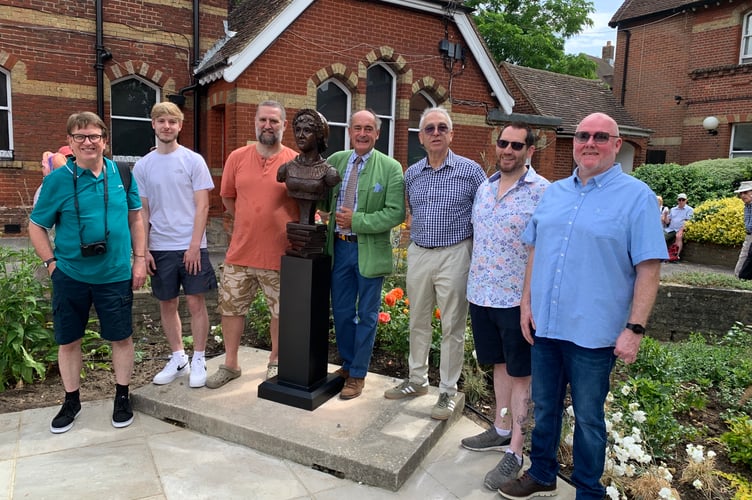
These surviving links help explain why Alton Town Council chose the Assembly Rooms lawn as the setting for a permanent memorial to Austen.
Although the Assembly Rooms did not open until 1880, the surrounding streets retain buildings that would have been familiar to the author.
The sculpture was commissioned to mark the 250th anniversary of Austen's birth in 1775.
It was created by internationally renowned sculptor Mark Coreth, best known for his bronze wildlife sculptures.
His design depicts Austen's bust rising from a stack of her six completed novels, symbolising her enduring literary legacy.
The bronze was cast at the Morris Singer Foundry in nearby Lasham, a Hampshire business with a distinguished history of producing works for leading British sculptors.
The project was led by Alton Town Council, supported by East Hampshire District Council.
The surrounding Regency Garden features plants mentioned in Austen's novels and letters, roses named after her characters and benches inspired by Regency carriages.
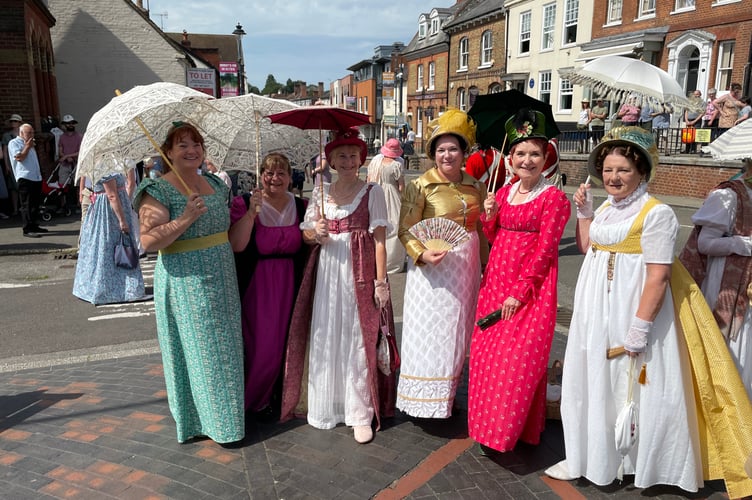
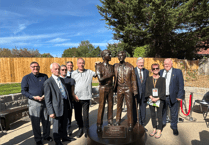
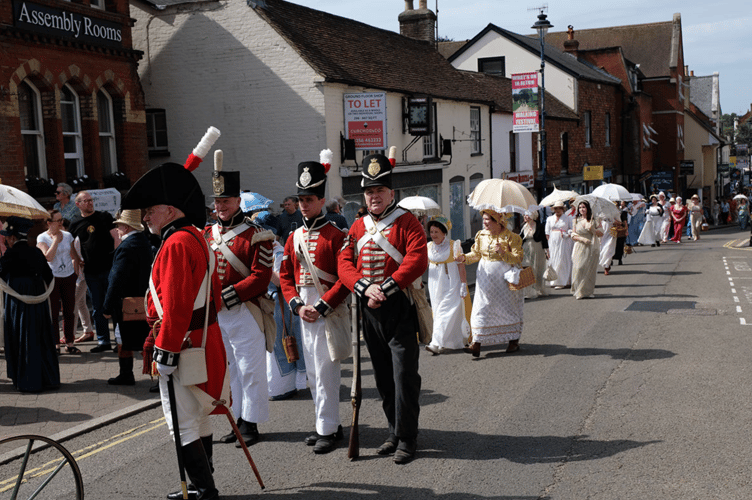
The statue was unveiled on June 21, 2025, during Alton's annual Regency Day celebrations, with hundreds of residents and visitors, many in period costume, watching a procession from the Market Square to the Assembly Rooms.
Among those attending was Caroline Knight, a descendant of Austen's brother Edward, who travelled from Australia.
An intriguing aspect of the memorial is its connection to the streets and buildings of Alton that Jane Austen would have known well.
More than two centuries after the financial collapse of her brother's bank, the author’s bronze likeness now looks towards the building where the Alton chapter of her family's history began.
Comments
We've recently changed our login process. If you have an account for commenting, you will need to re-register on the login window.
This article has no comments yet. Be the first to leave a comment.