
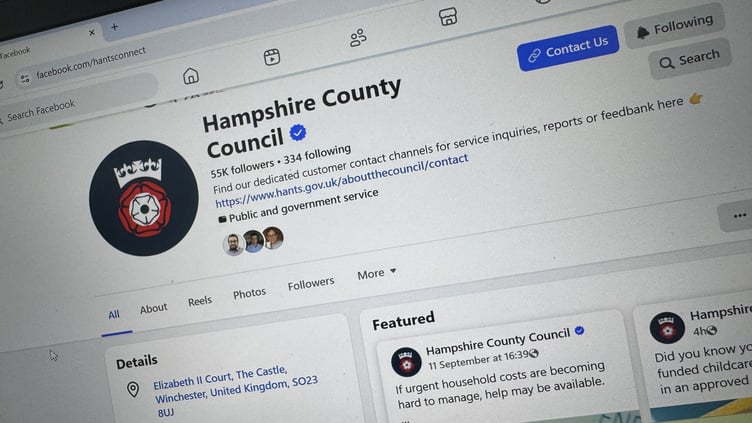
Hampshire County Council spent more than half a million pounds advertising on Google, Facebook and Snapchat over 19 months.
Figures from the council’s procurement card records show £322,228 was spent in 2025, with another £229,459 spent between January and July 2026, bringing the total to £551,687.
Analysis of the records found payments to Google Ads, Facebook’s parent company Meta, and Snapchat.
The money was used for a range of campaigns, including advertising jobs, recruiting foster carers, promoting public health messages and publicising council services and events.
Advertising for country parks, farms and outdoor centres was also funded through the spending, according to the council.
Although the costs appear under a central budget heading called “marketing recharge projects”, the council said the money is later charged to the department that ordered the advertising.
A spokesperson said: “Google, Meta and Snapchat advertising costs are charged to a central cost centre known as ‘Marketing Recharge Projects’ and then subsequently recharged to the relevant Hampshire County Council service area that commissioned the activity.”
Councils increasingly use paid advertising online as social media companies show fewer unpaid posts to users.
Explaining the spending, Hampshire County Council said it serves more than 1.4 million residents and provides a wide range of services across the county.
The spokesperson said: “Organic social media reach has declined significantly across most platforms, as algorithms increasingly prioritise paid content.




“As a result, important messages cannot reliably reach large audiences through organic channels alone.”
The council said paid advertising helps promote vacancies for social workers, nurses, carers and teachers, while also supporting campaigns to recruit foster carers.
According to the authority, those campaigns can save money in the long term by reducing reliance on agency staff and independent fostering placements.
The council said it measures the success of campaigns using information such as website visits, enquiries, applications and engagement levels.
“Digital advertising also provides a high degree of accountability, with campaign performance monitored in real time,” the spokesperson added.
“This allows activity to be refined, paused or redirected as required, helping to maximise return on investment and ensure the effective use of spend.”
The council also said digital advertising helped support income-generating services by increasing visitor numbers to attractions including its country parks, farms and outdoor centres.
Comments
We've recently changed our login process. If you have an account for commenting, you will need to re-register on the login window.
This article has no comments yet. Be the first to leave a comment.