
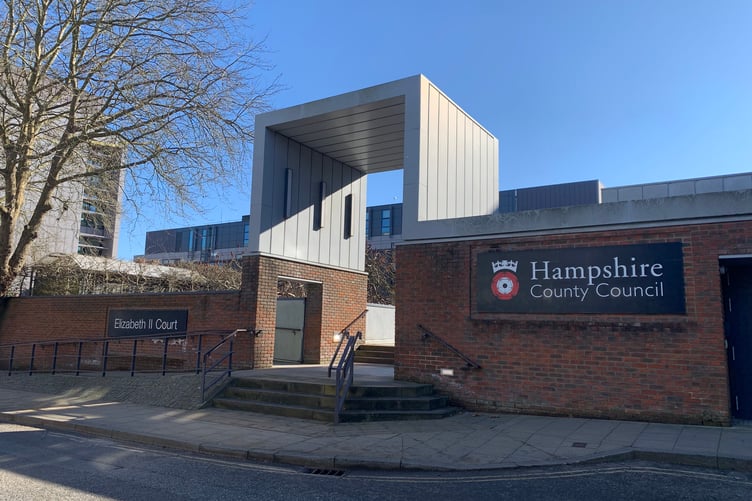
Hampshire County Council could effectively go bankrupt in a bid to deal with a £101.9 million budget deficit.
It’s one of two options it is considering to overcome the deficit, the other being a huge council tax increase of almost 15 per cent.
In light of the deficit the Conservative-run administration is facing in the current financial year, its chief financial officer (CFO), Andrew Lowe, will present the plans to the cabinet.
The first option proposes a 14.99 per cent increase in council tax for 2026/27, which would require approval from residents via a referendum on May 7.


In his report, Mr Lowe said this option would allow the council to set a balanced budget, supported by taking £13.3 million from its reserves.
It would also leave enough funds in the Budget Bridging Reserve —the council’s “piggy bank”— to balance the 2027/28 budget, avoiding the need to issue a Section 114 notice, the effective declaration of bankruptcy for a local authority.
The second option, less attractive in its long-term implications, would see council tax rise by 4.99 per cent, the maximum permitted without triggering a referendum under current rules for 2026/27.
However, this approach would require a £101.9 million draw from reserves to balance the 2026/27 budget and would leave insufficient funds to set a balanced budget the following year, putting the council in a position where it may have to issue a Section 114 notice.
He added: “On the balance of probabilities, without additional government support, the CFO would have no choice but to issue a Section 114 notice in advance of agreeing the 2027/28 budget.”
In December, the county council requested exceptional financial support from the Government in the form of council tax flexibility, which would have allowed it to raise council tax above the referendum threshold without holding a public vote.
However, in a letter dated February 9 to the leader of the council, Cllr Nick Adams-King, the government declined the request.
While acknowledging the decision would be disappointing, ministers wrote: “We have sought to strike a balance between supporting councils’ financial recovery and limiting the impact on taxpayers and we have not agreed to all requests.”
Addressing the proposals, Cllr Adams-King said: “We must be honest: with the second lowest council tax precept of any county in England, council tax in Hampshire will have to rise.
“Our Chief Finance Officer has been clear that a 15% increase would be needed to secure long-term sustainability. My Cabinet colleagues and I are acutely aware of the cost of living pressures facing households, which is why we argued strongly for a phased approach.
“Government refused that request. Without greater support from Whitehall, a significant rise will be unavoidable at some point.
“While I will listen carefully to colleagues, I am not currently convinced that now is the moment for such a step. There are still levers we can pull — including working more closely with the NHS in Hampshire to share the burden of social care more fairly — to reduce both the scale and the need for future increases.”
Comments
This article has no comments yet. Be the first to leave a comment.