
Drones built in Hampshire used on the battlefields of Ukraine were the focus of a major defence announcement this week, as senior Conservatives warned Britain is falling behind in an increasingly dangerous world.
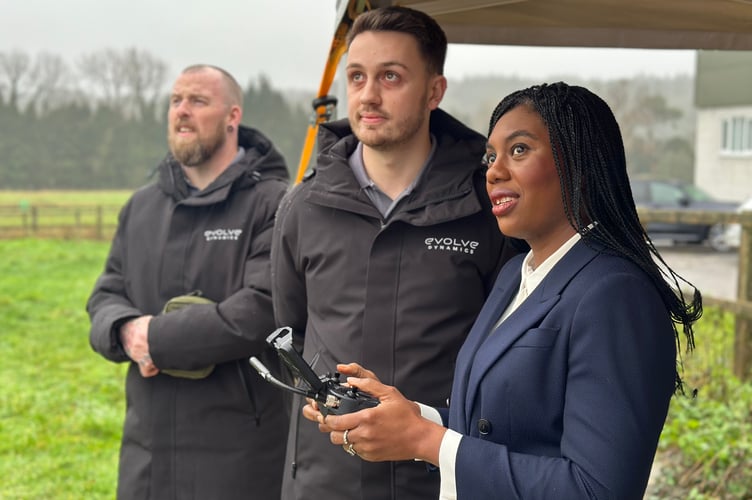
The cutting-edge Hampshire drone company Evolve Dynamics, based near Farnham, was placed at the centre of the debate during a visit by Conservative leader Kemi Badenoch and Shadow Defence Secretary James Cartlidge.
The firm employs local engineers and veterans and designs and manufactures British-built drones aimed at reducing reliance on Chinese components in critical defence supply chains.
The visit coincided with the Conservatives unveiling plans for a £50 billion Sovereign Defence Fund, designed to accelerate Britain’s war readiness as threats from Russia and wider global instability continue to grow.
-Cllr-Lulu-Bowerman-Tim-Lawton--Image-LDRs.jpeg?width=209&height=140&crop=209:145,smart&quality=75)



Ms Badenoch said the proposed fund would redirect public money away from what she described as “costly environmental projects” and into defence.
“Out of the £50 billion, £17 billion would come from the public sector,” she said. “That includes £11 billion from scrapping Ed Miliband’s net zero projects that are not going to tackle climate change but will cost a lot of money. We believe defence of the realm has to be the first priority of any government.”
Mr Cartlidge said the Hampshire visit showed how defence investment could strengthen both national security and the local economy at a time when Russia continues to pose a direct threat to the UK.
Referring to the Salisbury poisonings, he said: “What happened in Salisbury was a terrible event. It has been announced that Vladimir Putin is morally responsible — that was murder on our streets. It shows this threat isn’t just about Ukraine; it reached the UK itself. We’ve got to support Ukraine, but we also need to ramp up our own defence, with uncrewed systems like the ones manufactured here.”
Evolve Dynamics designs and manufactures small uncrewed aerial systems in Britain, with its Foxe and Wolfe drones shaped directly by frontline experience from the war in Ukraine.
Ms Badenoch said the conflict had shown how rapidly warfare is changing.
“What worked 20 years ago isn’t working now,” she said. “We need to accelerate our defence capability, especially in drones. This is the moment to commit to small businesses — they are the lifeblood of our economy — and to make sure we’re ready for the next set of conflicts.”
Mr Cartlidge also warned of the strategic risks posed by dependence on other states for key technology components.
“If there were, for example, an invasion of Taiwan — which I hope never happens — there would be a serious threat to our supply chains,” he said. “That’s why it’s not just about buying drones for the Army, but ensuring they are made with British components so we have resilience.”
While funding decisions would ultimately sit with a reformed National Wealth Fund — renamed the National Defence and Resilience Bank under Conservative plans — the visit was intended to highlight the type of British firms the policy is designed to support.
Nationally, the Sovereign Defence Fund would combine £17 billion of public investment with around £33 billion of private finance, enabling faster procurement of drones and new technologies, backing defence start-ups and strengthening domestic manufacturing.
The Conservatives say the plans stand in contrast to what they describe as Labour’s “glacial pace” on defence, as warnings mount from senior military figures over Britain’s preparedness in an increasingly volatile and dangerous world.
Comments
This article has no comments yet. Be the first to leave a comment.