
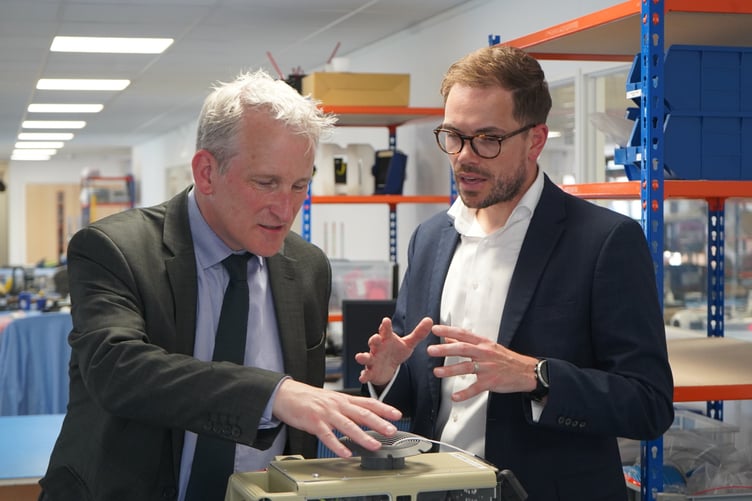
This week is Farnborough Airshow Week.
Every two years Hampshire hosts one of the world’s premier business events, bringing together the global aerospace industry and showcasing the very best of British engineering and innovation. In the years between, the Paris Air Show takes centre stage instead.
The last airshow attracted 1,400 exhibitors and generated $100 billion in sales, including about £13 billion for the UK aerospace supply chain. As well as the buyers and sellers, a good chunk of the 100,000 visitors are members of the public on the final day, called ‘Pioneers of Tomorrow’ (this year on Friday, July 24) which is free to attend to anyone 21 and under.
Farnborough sits at the pinnacle of a much wider industry: business events, often known as MICE (Meetings, Incentives, Conferences and Exhibitions).
It may not be the most glamorous acronym, but it represents one of Britain’s real economic strengths.
Across the UK, business events generate over £30 billion for the economy each year and support hundreds of thousands of jobs. Around 6.5 million people visit Britain annually for business purposes, with roughly 2.5 million attending conferences, exhibitions and trade events. Those international visitors contribute almost £2.8 billion in direct spending alone, quite apart from the deals they strike, the exports they generate and the investment they encourage.
Hampshire plays an important role in that success. Alongside Farnborough, we host major marine trade shows at Southampton, the Hampshire Business Show at the Ageas/Utilita Bowl, and Portsmouth and South Coast Business Week. Locally we also have excellent business networking organisations such as Petersfield First Friday, the Business Growth Network, East Hampshire District Council’s Business East Hants, and Alton College’s programme of business breakfasts.
Elsewhere with venues such as ExCeL and the NEC, the UK hosts some of Europe’s – and indeed the world’s – premier business conventions – such as World Travel Market, Education World Forum, London Tech Week and more. Bringing with them delegates from every continent.
Given that success, I was really taken aback to learn that the Government had just decided to cut the business events team at VisitBritain from nine to two, and totally abolish the Business Events Growth Programme.
Of course, every government has to make difficult decisions. Public money should always be spent carefully, and departments will sometimes need to reduce budgets. But you should do this is a way that supports, not impedes, business and economic growth.


In the context of government spending these were tiny amounts of money, but they were highly valued by the sector. As one witness to our select committee put it: “we are now the only major economy without a fully funded and resourced business events team, which will impact our ability to compete effectively, and attract major international business events.”
In truth, scrapping the Business Events Growth Programme will likely not impact giant established success stories like Farnborough or World Travel Market. But they may well a little further down the scale, where emerging events deciding where to locate, or international organisers choosing between competing destinations, may simply look elsewhere.
And then there is the question of where future growth comes from.
I understand that the Treasury did not ask the Department for Culture, Media and Sport for an assessment of the impact of this decision on economic growth or export earnings before agreeing to the change in priorities. Perhaps this is the first thing that should change.
Comments
We've recently changed our login process. If you have an account for commenting, you will need to re-register on the login window.
This article has no comments yet. Be the first to leave a comment.