
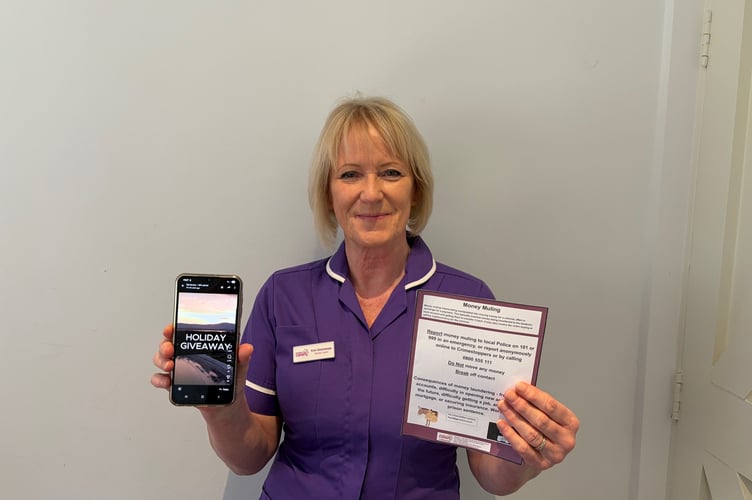
In her latest column, Kerenza Faram warns that students are being targeted by criminals recruiting so-called money mules through social media, often with promises of quick cash and luxury lifestyles.
Strapped-for-cash students are being targeted by scammers to act as money mules.
It is a relatively new but increasingly widespread phenomenon, particularly among the student population, with 65 percent of money mules aged under 30 — highlighting how young people are being disproportionately drawn into criminal activity.
Money muling involves being manipulated into moving money for a criminal, often in exchange for payment.




This typically involves money being transferred to a student’s bank account before being moved elsewhere, sometimes through multiple accounts to disguise its origin. It may also involve the victim buying or selling cryptocurrency on behalf of the criminal.
According to the National Crime Agency, an estimated £10 billion is laundered by money mules annually. The issue has become more prevalent as criminals increasingly use social media platforms to target and recruit young people, particularly students facing financial pressure and rising living costs across universities and colleges nationwide today.
J, a 19-year-old student who wishes to remain anonymous, responded to an Instagram post about earning cash.
“What student doesn’t want some extra money?” she said. “There were pictures of £50 notes and holidays. I really wanted a holiday and didn’t think. I simply replied to the post and was contacted promptly. I gave them my bank details and was sent money.”
Fortunately, J realised that something was not right and informed her bank. She was warned of the consequences of money laundering, which can include frozen bank accounts and difficulty opening new ones in the future — affecting a graduate’s ability to get a job, arrange a mortgage or secure insurance. In the most serious cases, it can lead to a criminal record or prison sentence.
J now urges any students who are approached to break off all contact, refuse to receive or move any money and seek advice from someone they trust.
Money muling can be reported to police on 101, or 999 in an emergency, and anonymously to Crimestoppers. Suspected adverts can also be reported to social media companies, which can be requested to take them down to protect users.
The signs to look out for in unwitting victims among friends or family include someone receiving sudden influxes of money, clothes or gifts without a reasonable explanation, an obsession with making money online or via social media, or a secretive attitude toward their phone, apps or new online contacts.
Having cared for vulnerable people in the community, Guardian Angel Carers is particularly concerned that some students may be at higher risk of becoming money mules or being scammed, and hopes raising awareness will help protect local young people.
Free anti-money muling leaflets can be requested from [email protected], and anti-scam talks can also be arranged.
Kerenza Faram is Farnham & Rowledge Team Leader for Guardian Angel Carers.
Comments
This article has no comments yet. Be the first to leave a comment.