
A CONTROVERSIAL proposal by TAG Farnborough to introduce an area of new “controlled” airspace around the airport seems likely to go ahead.
But objectors continue to raise concerns about increased flying over much of East Hampshire, and the likely loss of Lasham Gliding Society - the UK’s largest gliding club - as a result.
According to TAG Farnborough, the proposed airspace design would offer all airspace users “predictability and consistency of operations”.
The airport currently uses “uncontrolled airspace” (class G), which is shared with other airports and general aviation - the change would mean it would have its own airspace in which to operate.



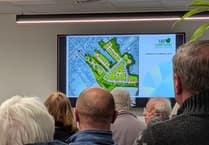
The proposal has proved contentious, with objections coming from East Hampshire MP Damian Hinds, East Hampshire District Council and the South Downs National Park Authority.
Hampshire county councillor, East Hampshire district councillor and Whitehill town councillor Adam Carew also objected to the plan when he was the town council’s leader.
Previous analysis undertaken by Lasham Gliding Society said that at present the Whitehill and Bordon, and Binsted and Bentley, areas are both typically estimated to see and hear fewer than 10 flights a day. This figure could rise to 65 a day and, as altitudes would be lower, noise levels would be increased.
When news first broke, opponents from the gliding society described the proposal as the equivalent of a big limousine company “buying two lanes of the M25 exclusively for the use of the rich and famous”.
Following a lengthy consultation period, TAG Farnborough submitted its case for the airspace change to the Civil Aviation Authority (CAA).
But earlier this month the release of a CAA-commissioned report, by the Future Airspace Strategy VFR Implementation Group into airspace sharing around Farnborough Airport, recommended that TAG Farnborough should withdraw the proposal which far exceeded its current operational needs.
But in a statement to the Herald, TAG Farnborough confirmed it had “no intention of withdrawing its airspace-change proposal to the CAA”. “This is a complex application and the process is ongoing,” a spokesman said.
And while agreeing to participate in any forum aimed at mitigating the impact on general-aviation traffic, in its feedback statement TAG warned that the current proposal “cannot be withdrawn due to the impact it will have for other stakeholders”, namely Southampton Airport, “in terms of the proposed implementation date of March 2017”.
This statement appears to introduce the inclusion of at least one other significant party into the equation, which critics say was not made clear before, and that the outcome is a “done deal” which would not only put a stop to gliding from Lasham, but could see new flightpaths over many East Hampshire homes - exactly what opposers were resisting.
It is thought that the proposal could enable Southampton to do away with the current holding pattern over Winchester and enable aircraft to fly straight into the airport using a dedicated flight path.
This, it is feared, could introduce yet more low flying aircraft on a regular basis over the area.
But, despite the call for withdrawal, it seems to be full steam ahead with the CAA calling for stakeholders to meet to discuss how it can be taken forward.
It is a situation that shocked the gliding society which has said: “This proposal as it stands is a threat to our survival at Lasham, and we are currently seeking legal advice.”
The Future Airspace Strategy VFR Implementation Group believes that while the impact on powered aircraft would be manageable, on gliding it would be “significant” and, in the case of Lasham Gliding Society, “operationally critical”.
The review explains that, while the Secretary of State for Transport (Patrick McLoughlin) had approved a rise in permitted movements to 50,000 per annum, the growth at Farnborough since has been “modest and well below forecast”.
Nonetheless, it highlights TAG’s intention to exclude all “extraneous aircraft” from its proposed controlled airspace.
The Future Airspace Strategy VFR Implementation Group points out that the current airspace design relies on the acquisition of “discrete blocks for the sole use of Farnborough traffic”.
It is, in the short term, recommending that the CAA does not support the proposal, “nor that of any other proposer with the same or similar restrictive intent”.
Comments
This article has no comments yet. Be the first to leave a comment.