
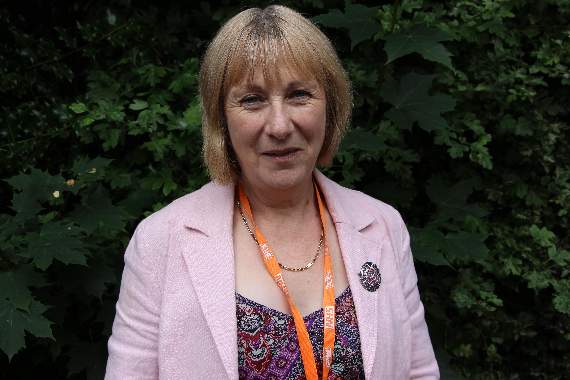
AS a young nurse embarking on her career 40 years ago, Janice Gabriel chose to specialise in caring for cancer patients – but she had no inkling when she started training that she would end up on the cutting edge of research into treatments that can now cure or control most cancers.
In addition, her career has given her opportunities to travel the world to meet consultants and doctors specialising in the disease.
Now after 40 years of outstanding service Janice, who lives in Chawton with daughters Imogen and Bethany, has been awarded a Fellowship of the Royal College of Nursing for her dedication and commitment. Only six such accolades have been won this year.
Janice received her award at the recent Fellowship of the Royal College of Nursing Congress in Glasgow. It celebrates the very best in nursing and awards Fellowships, Honorary Fellowships and Awards of Merit to those who have made an outstanding contribution to nursing.




Described as “an outstanding group of people” the RCN often calls on the expertise and experience of Fellows to help with important projects. Recipients of the award are entitled to use the letters FRCN after their name.
The award, a beautiful gold and blue medal, came as a total surprise to Janice but she is very proud to have received it.
She has come a long way medically since she started her nurse training at University College Hospital, in central London, in 1976. It was a time when matrons were still in charge of wards, there were no male nurses and cancer patient treatment was in its early stages.
Having decided her career lay in cancer care Janice then worked in specialist, pioneering, units at University College Hospital and The Royal Marsden.
“Cancer care then was so different” she said “It was all a bit dreary and we had only five chemotherapy therapy drugs that were not always effective. Patients stayed in hospital for a long time and sadly a lot of them died.
“We had long shifts – seven days on and two off – but because patients stayed so long we got to know their families and we became friends with them. Every so many weeks we would move them all to other wards so their ward go a two-week thorough spring clean then we nurses had to make up all the beds before bringing back the patients.
“You couldn’t do that now a days as there are too many patients and not enough beds!”.
Janice, who studied alongside young doctors who went on to become specialists, saw the progression of treatments and new medicines that have so improved cancer treatement.
“Very few people die of cancer now, providing it is diagnosed early, and if you have the disease the NHS is the best at treating you,” she said.
Janice got the chance to travelled the world, Canada, America, Australia, Italy, attending conferences but also keeping “hands-on experience” working in their hospitals.
In 1993, she was awarded a Florence Nightingale scholarship to study vascular access for patients
receiving chemotherapy, “Which took me to America and I felt very privileged to work in their hospitals with their doctor and consultants.
“In New York the treatment depended on who had health insurance and who didn’t, and there was a ward for prisoners, while in Texas because it is such a rich state everything was first class with state of the art hospitals. In Florida patients were mainly elderly and I didn’t think they got such good care.”
As in England Janice has seen the vast strides treatments have made to cure cancer patients in those countries and with gentler but more effective drugs that don’t have the terrible side effects of those used in those early days.
Janice is now a clinical network manager, based at NHS England – South (Wessex) in Southampton – formerly nurse director for the Central South Coast Cancer Network said “I have been nursing for 40 years and have worked with some fantastic people all of whom have been so committed to achieving the best for their patients and their carers’.
Working together we have been able to make lots of little changes which, combined together, have made a significant impact on patient care, especially for those undergoing chemotherapy.”
Recently she reduced her working hours to three days a week to give herself time to enjoy her family and home. She is also one of the Chawton Bell Ringers, a hobby she enjoys very much, and a Trustee of the Wessex Cancer Trust.
“I don’t want to give up the job completely as I enjoy working with colleagues and networking among the doctors and consultants and learning about new medical break throughs to fight cancer.”
Comments
This article has no comments yet. Be the first to leave a comment.